Do your days feel heavy? Writing notes after hours?
When dental workflows are unclear or spread across too many systems, admin builds up fast. Notes get delayed, explanations repeat, and finishing on time becomes harder than it should be.
Simple changes to your dental workflow and the systems that support it can give you time back, reduce admin load, and help your team finish on time, without rushing patients or lowering standards.
This is not about working harder.It is about removing friction from how your practice operates day to day.
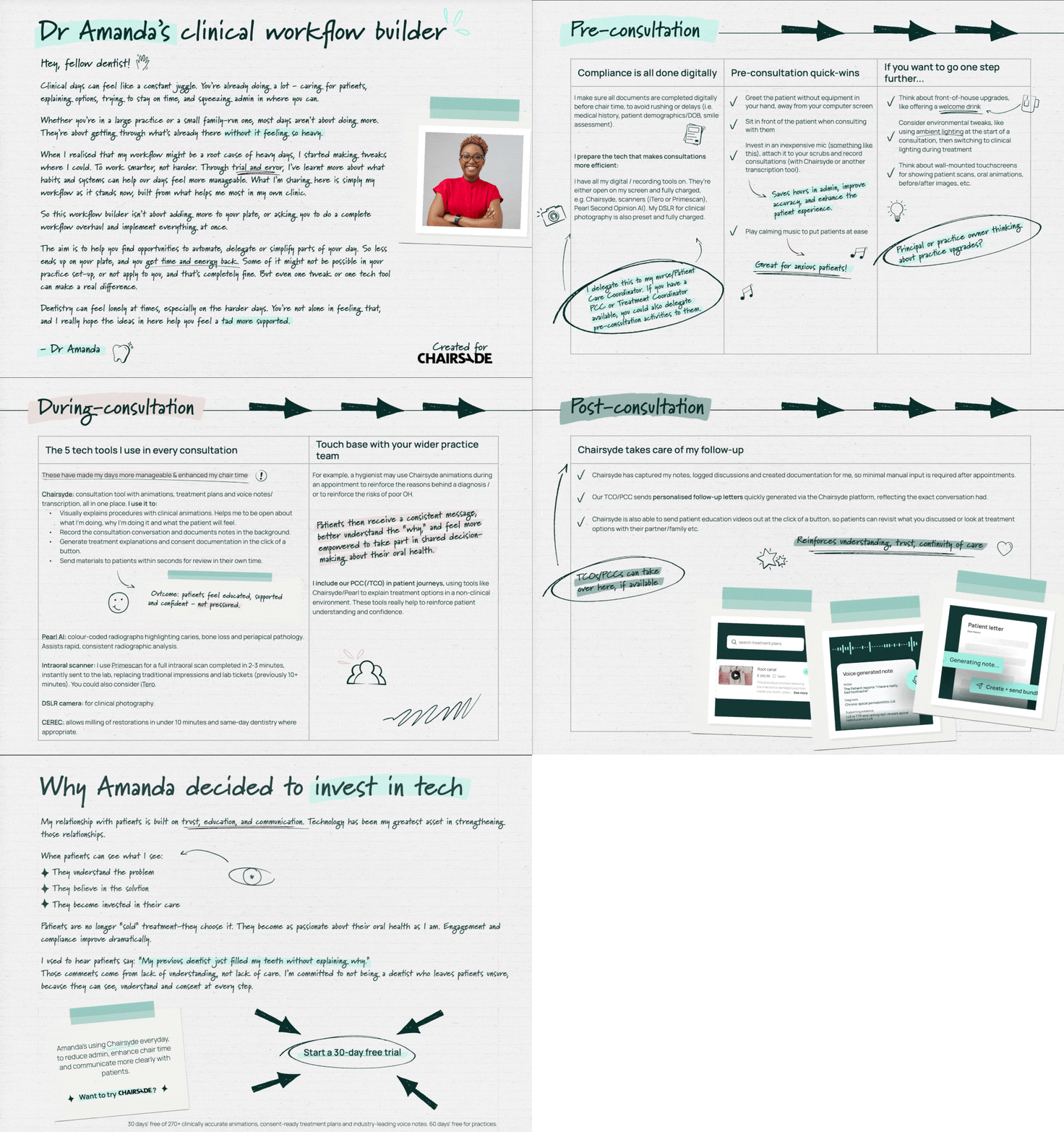
Clinical days can feel like a constant juggle. Patients to care for, options to explain, time to stay on top of, and admin squeezed in wherever it fits. This free workflow builder is Amanda’s actual clinical workflow, built through trial, error, and years of refining what helps days feel lighter in real practice.It is not about doing more, changing everything at once, or forcing a rigid system. It is about finding small opportunities to automate, delegate, or simplify, so less ends up on your plate.
How to improve your dental workflow without rushing care
Here’s the full replay of Amanda’s session on designing a better dental workflow in real practice.
In this webinar, Amanda walks through how small changes to structure and systems can reduce admin, improve patient understanding, and help clinicians finish on time, without shortening appointments or compromising care.
This session focuses on how work actually happens in the chair, and how clearer workflows make the day feel lighter for both clinicians and patients.
Why dental practice efficiency starts with workflow, not speed
Dental practice efficiency is often misunderstood as seeing more patients or shortening appointments. In reality, efficiency comes from removing unnecessary repetition, unclear communication, and fragmented systems.
When your dental workflow is supported by clear, consistent practice systems:
Clinical notes are faster and more structured
Clear explanations and consistent structure mean notes are quicker to complete and easier to review later.
Dental practice efficiency improves when workflows are clear, repeatable, and supported by the right systems. When patient education, clinical explanations, and notes follow a consistent structure, teams spend less time repeating work and more time focusing on care.
This is where modern dental practice systems make the biggest difference.
Ready to improve your dental workflow? Book a demo today
Chairsyde is built by practising dentists to support real clinical workflows. It fits into how your team already works, rather than forcing change for the sake of it.
Whether you want to reduce admin, improve patient understanding, or create more consistent systems across your practice, Chairsyde helps you take the next step.
What does dental practice efficiency actually mean?
Dental practice efficiency is not about rushing appointments or seeing more patients per day. It is about reducing unnecessary admin, repetition, and friction so clinicians and teams can focus on patient care while finishing on time.
Why do dental workflows become inefficient over time?
Most practices add tools and processes gradually. Over time, this creates fragmented systems, inconsistent ways of working between associates, and duplicated effort. Without clear workflows, even good teams end up working harder than they need to.
How can better dental workflows reduce admin?
Clear workflows reduce repeated explanations, manual note writing, and switching between systems. When patient education, explanations, and records are structured and consistent, admin naturally reduces without compromising clinical detail.
What are dental practice systems and why do they matter?
Dental practice systems are the tools and processes that support how your team works day to day. When systems are disconnected or unclear, they slow everyone down. Well designed systems support consistency, save time, and improve patient understanding.
Is improving workflow just about using new software?
No. Software only works when it supports how clinicians actually work. Improving dental workflow usually starts with clarity, standardisation, and better patient communication, with systems chosen to support those goals rather than dictate them.
Can better workflows improve patient understanding and case acceptance?
Yes. When explanations are clearer and more consistent, patients are more confident in their decisions. This leads to better understanding, fewer repeated conversations, and more considered treatment planning.
Will improving efficiency change how long appointments take?
In most cases, appointments feel calmer rather than shorter. The time saved comes from reduced repetition, clearer explanations, and less admin before and after appointments, not from rushing patient interactions.
How long does it take to see improvements in practice efficiency?
Many practices notice small improvements within weeks once workflows are clarified and systems are used consistently. The biggest gains usually come from steady adoption rather than overnight change.
Is this relevant for both private and mixed dental practices?
Yes. Any practice that values patient understanding, consistent workflows, and finishing the day on time can benefit from improving how systems and processes support the clinical team.
Do associates need to change how they work?
Good workflow systems adapt to clinicians rather than forcing everyone to work identically. The goal is consistency where it matters, while allowing flexibility in clinical style.




.webp)


